What Actually Happens to Testosterone While You Sleep
Optimizing your testosterone levels is a cornerstone of recovery and performance for men who train hard. While nutrition and lifting get the most attention, the majority of your daily testosterone production occurs while you are unconscious. Understanding the biological link between sleep architecture and endocrine health is essential for maintaining high baseline energy, strength, and sexual function.
How Does Sleep Control Testosterone Secretion?
For men, testosterone production follows a distinct circadian rhythm. Unlike other hormones that remain relatively steady, testosterone levels are highest in the morning and lowest in the evening. This rise is not just a byproduct of resting: it is a proactive process driven by specific sleep cycles. (Luboshitzky et al., Journal of Clinical Endocrinology & Metabolism, 2001).
The secretion of testosterone is pulsatile, meaning it happens in "bursts" rather than a steady leak. These pulses are tied directly to the onset of sleep and the internal timing of your brain. When you close your eyes and drift off, your body initiates a complex series of hormonal signals. If this process is delayed or shortened, the total "yield" of testosterone for the next 24 hours is significantly compromised.
What Happens During the First REM Cycle?
One of the most critical windows for hormonal health occurs about 90 minutes after you fall asleep. This is typically when you enter your first Rapid Eye Movement (REM) cycle. Research suggests that the initial rise in testosterone is closely synchronized with this first REM onset. (Luboshitzky et al., JCEM, 2001).
During this phase, the brain communicates with the pituitary gland to release luteinizing hormone (LH), which then signals the Leydig cells in the testes to produce testosterone. If your sleep is interrupted during this early phase, or if you consume alcohol before bed (which suppresses REM), you effectively cut off the "starting gun" for your endocrine system. For men who train, missing this first peak can lead to a sluggish feeling in the morning and reduced aggression and drive in the gym.
How Does Sleep Fragmentation Blunt Hormone Pulses?
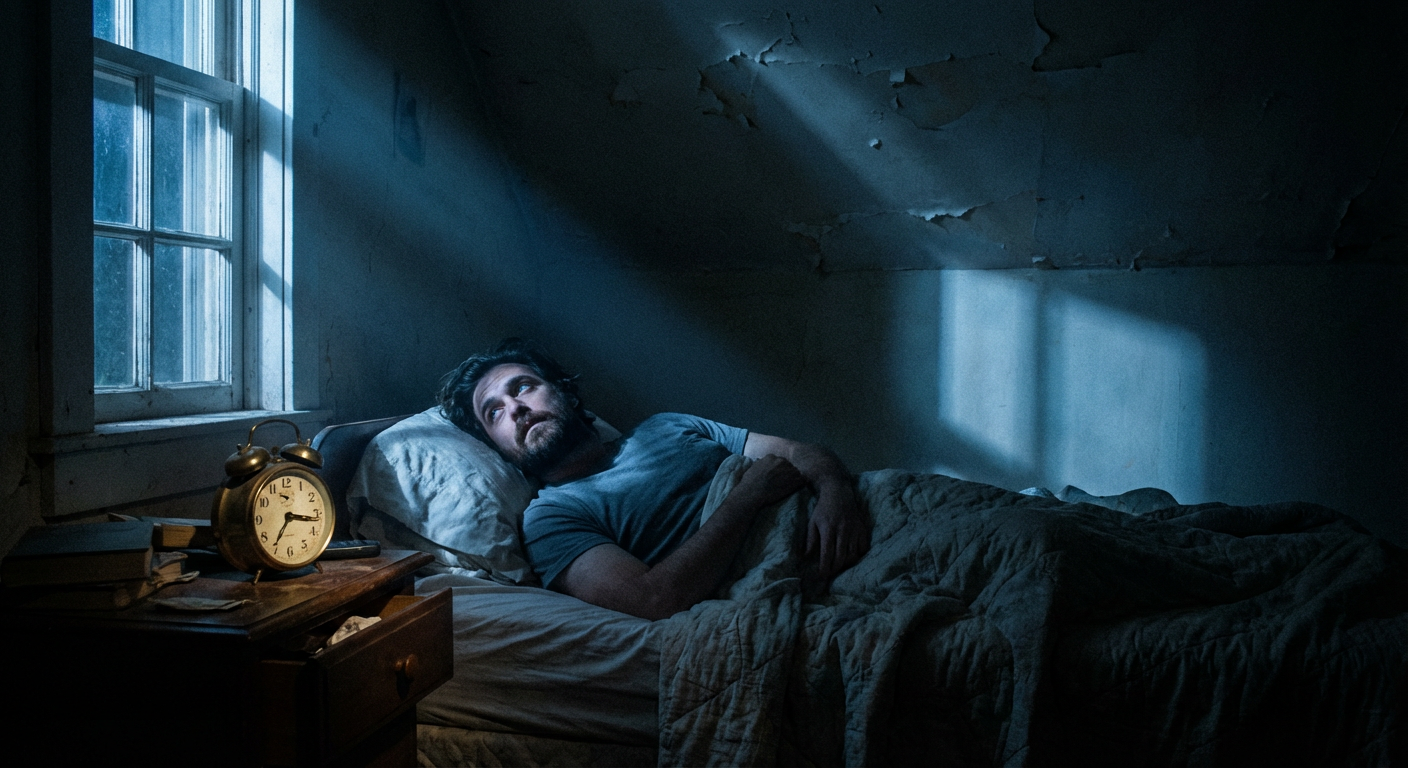
It isn't just about how many hours you spend in bed. It is about the continuity of those hours. Quality matters as much as quantity. Fragmentation, often caused by modern stressors or sleep apnea, acts as a "pulse killer" for testosterone production. When you wake up multiple times throughout the night, the pulsatile rhythm is reset or blunted.
A landmark study demonstrated that even a single night of fragmented sleep significantly reduces the amplitude of testosterone pulses. (Schmid et al., Journal of Clinical Endocrinology & Metabolism, 2012). When sleep is broken, the body stays in a state of semi-alertness. This keeps cortisol levels higher than they should be. Because cortisol and testosterone have an inverse relationship, the presence of stress hormones late at night prevents the deep, restorative pulses your muscles need for repair.
What Is the Connection Between Deep Sleep and GH?
While REM is linked to the initial "trigger" of testosterone, Slow-Wave Sleep (SWS), or deep sleep, is where the heavy lifting occurs for growth hormone (GH) and testosterone co-release. SWS typically occurs in the first half of the night and is the most physically restorative stage of sleep.
During SWS, the body enters a highly anabolic state. Growth hormone peaks during these deep cycles, working in tandem with testosterone to facilitate protein synthesis and tissue repair. For men between 25 and 45 who lift, this is the most valuable part of the night. If you stay up late scrolling on your phone or working under blue light, you are cutting into your SWS window. This leads to a double-whammy: lower GH for muscle repair and lower T for systemic drive. If you aren't sure how your sleep quality stacks up, taking a free sleep assessment can help identify these hidden recovery gaps.
What Are the Cumulative Effects of Chronic Short Sleep?
The real danger lies in chronic sleep deprivation. Losing an hour or two of sleep might seem manageable with caffeine, but your endocrine system cannot be fooled. When men are restricted to five hours of sleep per night for just one week, their daytime testosterone levels can drop by 10% to 15%. (Leproult & Van Cauter, JAMA, 2011).
This decline affects both "Total" and "Free" testosterone. Free testosterone is the bioavailable fraction that actually interacts with your androgen receptors to build muscle and burn fat. Chronic short sleep also increases Sex Hormone-Binding Globulin (SHBG), which acts like a sponge, soaking up free testosterone and making it unusable. Over months and years, this leads to lower bone density, increased body fat, and decreased libido, symptoms often misattributed to "just getting older."
Biology Simplified for the Modern Athlete
Think of your body like a high-performance engine. During the day, you are burning fuel and putting wear on the parts. Sleep is the time when the car goes into the shop for a full rebuild. If the mechanics (your hormones) only have four hours instead of eight, they can only do half the work. They might change the oil, but they won't fix the transmission.
The pulsatile nature of testosterone means your body needs undisturbed "blocks" of time to reach peak production. Every time you wake up to check a notification or because your room is too hot, you are essentially "stopping the clock" on your recovery. By prioritizing a consistent routine and utilizing the formula page to understand how specific nutrients support these sleep cycles, you can protect your natural hormone production from the stressors of daily life.
How to Protect Your T-Levels Tonight
Improving your testosterone profile through sleep requires a tactical approach. Start by cooling your environment to 65-68 degrees. This drop in core temperature is a biological signal that triggers the transition into deep sleep. Next, eliminate light exposure 60 minutes before bed. Light hitting the retina suppresses melatonin, which in turn disrupts the LH pulses required for testosterone secretion.
Finally, consider your micronutrient intake. Zinc, magnesium, and certain botanicals can help smooth the transition into REM and SWS, ensuring that when you do sleep, you are maximizing every minute. Many men find that incorporating a dedicated sleep aid like DOZE helps bridge the gap between a high-stress day and a high-recovery night.
Ready to Optimize Your Recovery?
Your training is only as good as your recovery. If you are hitting the gym hard but neglecting the pulsatile secretion of testosterone during sleep, you are leaving gains on the table. Take control of your biology by optimizing your nightly environment and routine.
- Take the free sleep assessment to find your recovery baseline.
- Explore how DOZE can help you achieve deeper, uninterrupted sleep cycles.
- Check out the formula page to see the science behind deep-sleep optimization.