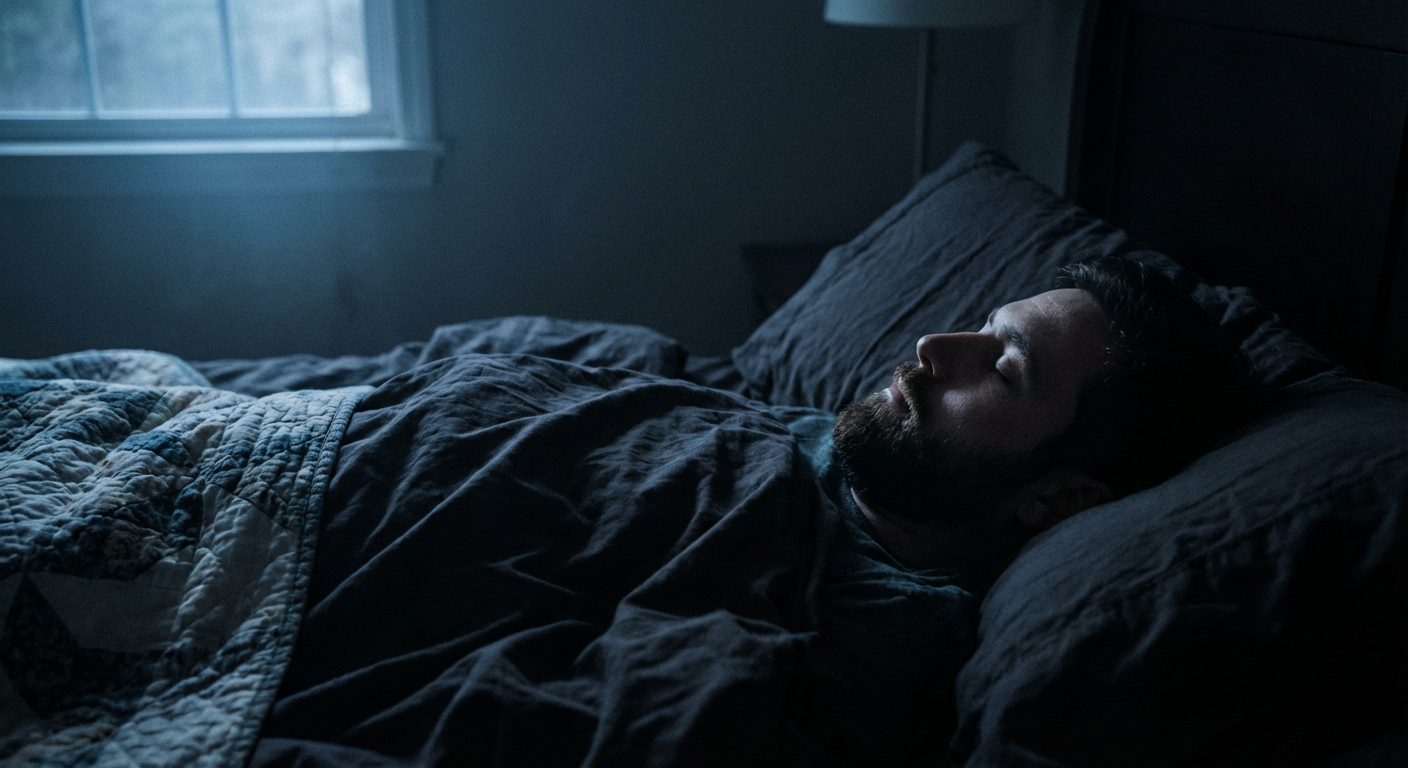
Deep Sleep vs. REM: Which Stage Matters More for Recovery
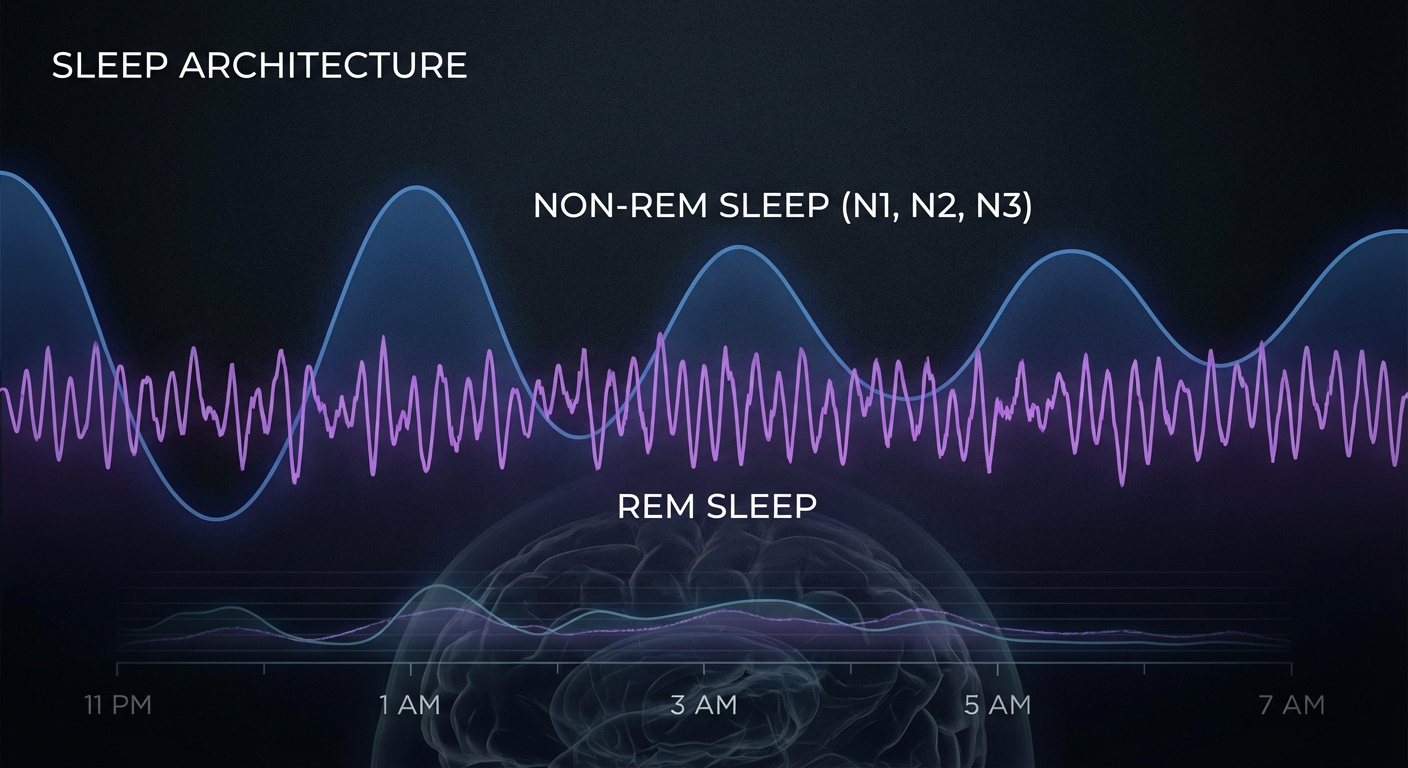
Optimizing human performance requires more than just high-intensity training and meticulous nutrition: it demands an understanding of the neurological architecture of sleep. While both deep sleep and REM serve distinct functions, the athlete must prioritize N3 slow-wave sleep to trigger the endocrine responses necessary for physical hypertrophy. This guide explores how these stages differ and how to maximize your recovery window.
What Is Deep Sleep and Why Does It Drive Physical Recovery?
Deep sleep, scientifically classified as N3 or Slow-Wave Sleep (SWS), is the physiological foundation of physical restoration. During this stage, your brain waves slow down to high-amplitude delta waves, and your body enters its most profound state of repair. For the man who lifts or trains at high intensities, this is where the "work" of the gym actually translates into gains.
The primary driver of this recovery is the massive release of anabolic hormones. Research indicates that the majority of daily growth hormone secretion occurs during the first few hours of the night, specifically during the initial bouts of deep sleep (Van Cauter, Sleep, 2000). If you truncate your sleep or experience frequent interruptions during the first half of the night, you are effectively handicapping your body's ability to repair muscle fibers and strengthen connective tissues.
Furthermore, deep sleep is the period when blood flow is diverted from the brain to the skeletal muscles. This allows for the delivery of oxygen and nutrients that facilitate cellular repair. Without sufficient N3 sleep, the inflammatory markers from a heavy squat session remain elevated, leading to prolonged soreness and a decrease in power output the following day.
How Does Deep Sleep Support the Immune System?
Recovery isn't just about muscular repair: it is also about systemic resilience. Intense training is essentially a controlled stressor that temporarily suppresses the immune system. Deep sleep acts as the primary counterbalance to this stress by facilitating the "stickiness" of T-cells and the production of pro-inflammatory cytokines that fight off pathogens.
Studies have shown that slow-wave sleep supports the formation of immunological memory, allowing the body to recognize and respond to threats efficiently (Besedovsky, Physiological Reviews, 2019). For the active man, a compromised immune system means missed training days. By prioritizing deep sleep, you are not just building muscle, you are ensuring your internal defense systems are robust enough to handle the high volume of a rigorous training program.
What Is the Role of REM Sleep in Performance?
While deep sleep handles the hardware, REM (Rapid Eye Movement) sleep focuses on the software. REM usually occurs in longer bouts during the second half of the night and is characterized by heightened brain activity, similar to being awake. For athletes, REM is critical for two main reasons: motor learning and emotional regulation.
When you are learning a new skill, such as a technical Olympic lift or a complex Brazilian Jiu-Jitsu transition, your brain "replays" these movements during REM sleep. This process, known as memory consolidation, moves these patterns from short-term storage into long-term procedural memory (Rasch, Physiological Reviews, 2013). If you are cutting your sleep short by waking up early for fasted cardio, you are likely sacrificing the very stage of sleep that helps you master new movements.
Beyond the physical, REM is the period where the brain processes emotional stressors. Training at a high level requires mental grit and focus. REM sleep helps strip away the emotional charge from stressful events, ensuring you wake up with the "cool head" required to push through a grueling session. A lack of REM often manifests as irritability, lack of focus, and a decreased "drive" to train.
How Does Training Volume Shift Your Sleep Requirements?
Your sleep architecture is not static: it adapts to the demands you place on your body. When you increase your training volume or intensity, your body's demand for slow-wave sleep typically increases. This is a biological feedback loop: the more tissue damage you incur, the more N3 sleep the brain attempts to prioritize to facilitate GH pulsatility.
However, there is a "goldilocks zone." Overtraining can actually lead to sleep fragmentation. When the central nervous system is overtaxed, sympathetic nervous system activity remains high, making it difficult to transition into deep sleep. This creates a vicious cycle: you need more deep sleep to recover, but your body is too stressed to enter it. This is why many elite lifters use targeted supplementation strategies, such as the formula page, to help transition the body from a sympathetic "fight or flight" state into a parasympathetic "rest and digest" state.
Why Is Deep Sleep Declining as You Age?
One of the harshest realities for men over 30 is the natural decline in slow-wave sleep. As we age, the amplitude and duration of delta waves decrease. This means that a 40-year-old man typically gets significantly less deep sleep than he did in his early 20s, even if he stays in bed for the same amount of time.
This decline in SWS is closely linked to a decrease in nighttime growth hormone levels and an increase in cortisol. For the aging athlete, this makes "perfect" sleep hygiene non-negotiable. You can no longer out-train a bad night of sleep. To combat this, you must control the variables that disrupt deep sleep, such as light exposure, room temperature, and alcohol consumption. It also makes objective data critical. Understanding your specific sleep deficiencies through the free sleep assessment can help you identify if your "recovery debt" is due to a lack of total sleep or a specific lack of N3 quality.
Which Stage Matters More for Your Goals?
The debate of Deep Sleep vs. REM is somewhat of a false dichotomy, as the body will attempt to prioritize what it needs most through "sleep homeostasis." However, for pure physical recovery, injury prevention, and hormonal health, Deep Sleep is the priority.
If you are in a heavy "bulking" or strength phase, your body needs the N3 stage to maximize protein synthesis. If you are in a skill-acquisition phase or a high-stress period at work, REM becomes your best friend. Most men who train hard find that they naturally lean toward needing more deep sleep during the work week and often experience "REM rebound" on the weekends when they are able to sleep in later.
To optimize both, focus on the first four hours of your sleep for deep sleep and the last three hours for REM. Disruptions in the first half of the night are more damaging to your testosterone and GH levels, while disruptions in the second half will destroy your mental clarity and coordination.
How Can You Optimize Your Sleep Architecture?
Improving sleep quality starts with consistency and professional-grade support. You can't force your brain into deep sleep, but you can create the biological conditions where it is inevitable. This involves cooling the core body temperature, magnesium glycinate for muscle relaxation, and L-theanine to quiet the "monkey mind" before bed.
At Stacked Routine, we designed DOZE specifically for the man who refuses to choose between a high-performance lifestyle and physiological health. By supporting the natural transition into SWS, you ensure that every hour you spend in bed is actually contributing to your totals in the gym.
Ready to Optimize Your Recovery?
Stop guessing about your recovery and start measuring it. If you are serious about moving the needle on your performance, you need to master your sleep architecture. Take the free sleep assessment to identify your specific recovery gaps, or skip the line and experience the gold standard in sleep support with DOZE. Your gains are waiting for you in the N3 stage.