Your Pre-Workout Is Useless Without a Nighttime Protocol
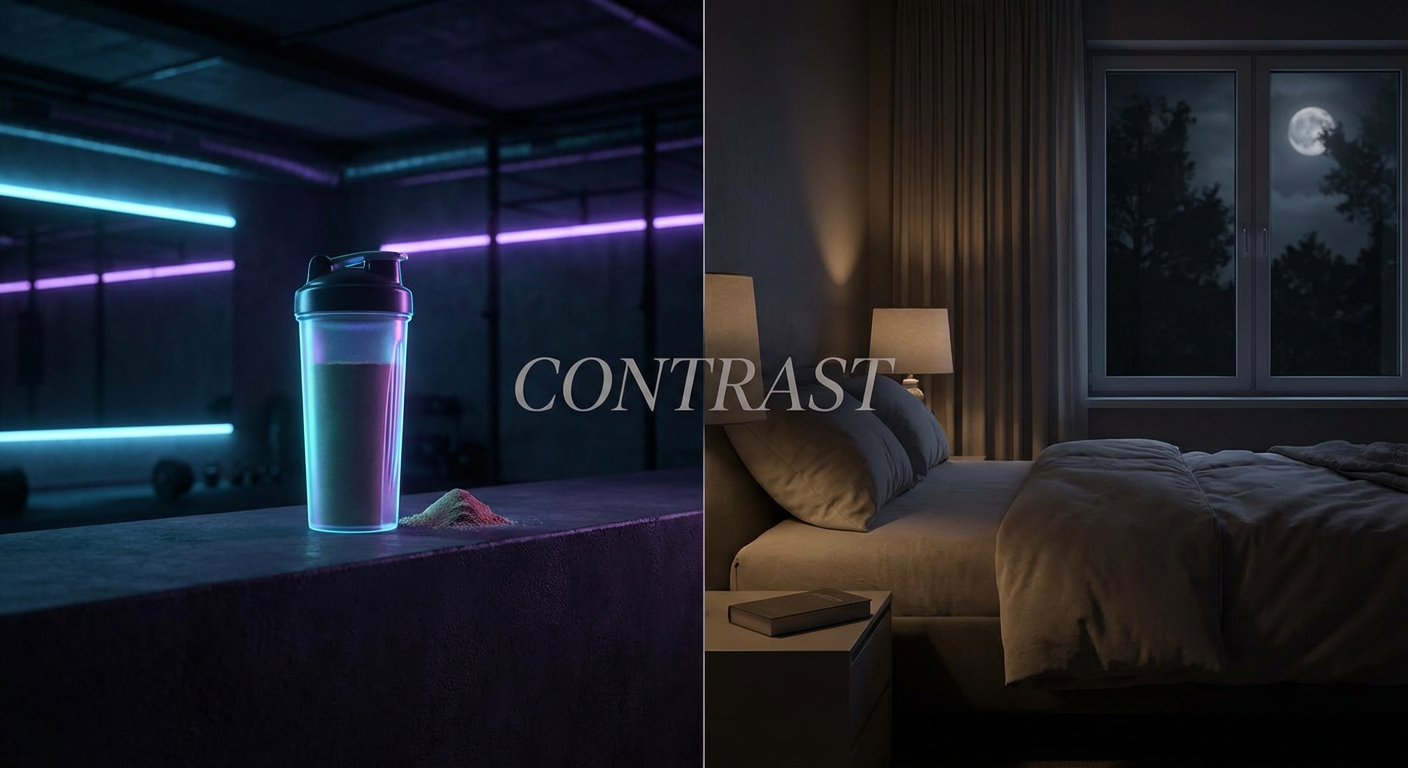
Most men spend hundreds of dollars on stimulant-heavy pre-workouts and high-performance gym gear but neglect the singular physiological window where muscle is actually built. Without an evidence-based nighttime protocol, your training intensity is essentially wasted. True recovery happens during deep sleep cycles, where hormonal secretion and protein synthesis peak to repair the damage done during your session.
Is the Anabolic Window Actually Your Sleep Window?
For decades, the "anabolic window" was defined as the thirty-minute period immediately following a workout. However, modern sports science has shifted the focus from the post-workout shake to the nocturnal recovery phase. Research suggests that while nutrition is vital, the metabolic environment required for muscle hypertrophy is primarily governed by sleep quality and duration.
A landmark review titled "Sleep and muscle recovery: endocrinological and molecular basis" highlights that sleep deprivation leads to a decrease in protein synthesis and an increase in protein degradation (Dattilo et al., Sleep Medicine Reviews, 2011). When you cut your sleep short or experience fragmented rest, you are essentially putting your body into a catabolic state, regardless of how much protein you consumed after your lift. If you want to see progress from your training, you must treat your sleep environment with the same discipline as your training program.
By prioritizing a structured nighttime routine, you ensure that your body has the resources and the hormonal environment necessary to repair tissue. This makes the the free sleep assessment a critical first step for any man who lifts. Without assessing where your recovery is failing, your expensive pre-workout is simply masking a deeper physiological deficit.
How Does Deep Sleep Drive Growth Hormone Secretion?
The primary reason sleep is non-negotiable for athletes is the secretion of Human Growth Hormone (HGH). For men, approximately 70% of daily HGH secretion occurs during deep, slow-wave sleep. This hormone is responsible for stimulating tissue growth, cell reproduction, and physical regeneration.
When you stay up late scrolling or allow blue light to interfere with your circadian rhythm, you blunt this essential spike. The body requires consistent, uninterrupted cycles of deep sleep to reach the stage where HGH production is at its peak. Failing to hit these deep sleep stages means your muscles remain in a state of micro-trauma for longer, increasing your risk of injury and stalling your strength gains. If your goal is traditional hypertrophy or explosive power, your "nighttime protocol" is actually your most effective supplement.
Is Your Caffeine Use Sabotaging Your Gains?
Most pre-workouts are formulated with 200mg to 400mg of caffeine anhydrous. While this provides a temporary boost in the gym, the long-term cost to your recovery can be devastating due to the half-life of the stimulant. Caffeine works by blocking adenosine receptors in the brain, the very receptors that signal your body it is time to wind down and rest.
Caffeine has a half-life of roughly five to six hours. This means if you take a pre-workout at 5:00 PM, half of that caffeine is still circulating in your system at 11:00 PM. Research has demonstrated that caffeine consumed even six hours before bedtime significantly disrupts sleep quality and reduces total sleep time (Drake et al., Journal of Clinical Sleep Medicine, 2013). This disruption prevents you from entering the restorative stages of deep sleep, effectively cancelling out the benefits of your intense training session.
To mitigate this, sophisticated athletes utilize ingredients like those found in the formula page to help calm the nervous system and counteract the lingering effects of daily stressors. Relying solely on stimulants to power through your day creates a "tired but wired" state that prevents the deep cellular repair your body needs.
Why Do Men Spend More on Pre-Workout Than Sleep?
There is a significant cultural disconnect in the fitness industry. Men will easily spend sixty dollars a month on a pre-workout that makes them feel itchy and anxious, yet they settle for poor-quality rest on a cheap mattress in a bright, warm room. This is a fundamental misunderstanding of the biology of performance. A pre-workout provides a temporary spike in energy: a sleep protocol provides a permanent floor for high-level performance.
Investing in your sleep is the highest-leverage move you can make for your physique. When you optimize your nighttime routine, you improve insulin sensitivity, testosterone production, and cognitive function. This creates a compounding effect where every workout becomes more productive because you are starting from a state of full recovery. Instead of chasing the next "extreme" stimulant, the focus should shift toward the ingredients that facilitate the transition into deep sleep.
What Does an Evidence-Based Nighttime Protocol Look Like?
A legitimate nighttime protocol is not about getting "knocked out" by a sedative. It is about supporting the natural transition of the nervous system from sympathetic (fight or flight) to parasympathetic (rest and digest). Science points to several key nutrients that, when timed correctly, significantly improve sleep architecture.
- Magnesium: This mineral is involved in over 300 enzymatic reactions. In the context of sleep, it helps regulate neurotransmitters that quiet the nervous system. Supplementing with magnesium can lower cortisol levels and improve sleep efficiency (Abbasi et al., Journal of Research in Medical Sciences, 2012).
- L-Theanine: Often found in green tea, this amino acid promotes relaxation without sedation by increasing alpha brain wave activity. It is particularly effective at smoothing out the "edges" of caffeine, making it a staple for anyone who trains late in the afternoon.
- Apigenin: Found in chamomile, this bioflavonoid binds to specific receptors in the brain that may promote sleepiness and reduce insomnia.
Combining these elements creates a synergistic effect that prepares the brain for the restorative work of the night. This is the logic behind DOZE, which targets the specific needs of active men who need to shut down their brains after a high-output day. Timing these nutrients 30 to 60 minutes before bed creates a "buffer zone" that signals to your body that the work day is over and the recovery day has begun.
How Can You Optimize Your Sleep Environment?
Beyond supplementation, your environment plays a massive role in how effectively your body utilizes your sleep window. The body’s core temperature needs to drop by about two to three degrees to initiate sleep. Keeping your room cool, ideally between 65 and 68 degrees Fahrenheit, is a science-backed way to fall asleep faster.
Light exposure is the other critical factor. Exposure to blue light from phones or televisions late at night suppresses melatonin production. By implementing a "digital sunset" and using blackout curtains, you support the natural rhythm of your hormones. When you treat your bedroom like a recovery lab, the results show up in the mirror and on the barbell. You are no longer just "sleeping": you are actively recovering.
Ready to Optimize Your Recovery?
If you are serious about your training, it is time to stop neglecting the most anabolic period of your day. Your pre-workout can only take you so far if your internal systems are running on fumes. By prioritizing a science-backed nighttime protocol, you can bridge the gap between hard training and visible results.
Start by taking the free sleep assessment to identify your specific recovery roadblocks. Once you understand your baseline, you can experience the difference that a professional-grade recovery tool like DOZE makes in your daily performance and long-term gains. Don't let your hard work in the gym go to waste: own the night to win the day.