Creatine and Sleep: Can It Help When You Are Sleep Deprived
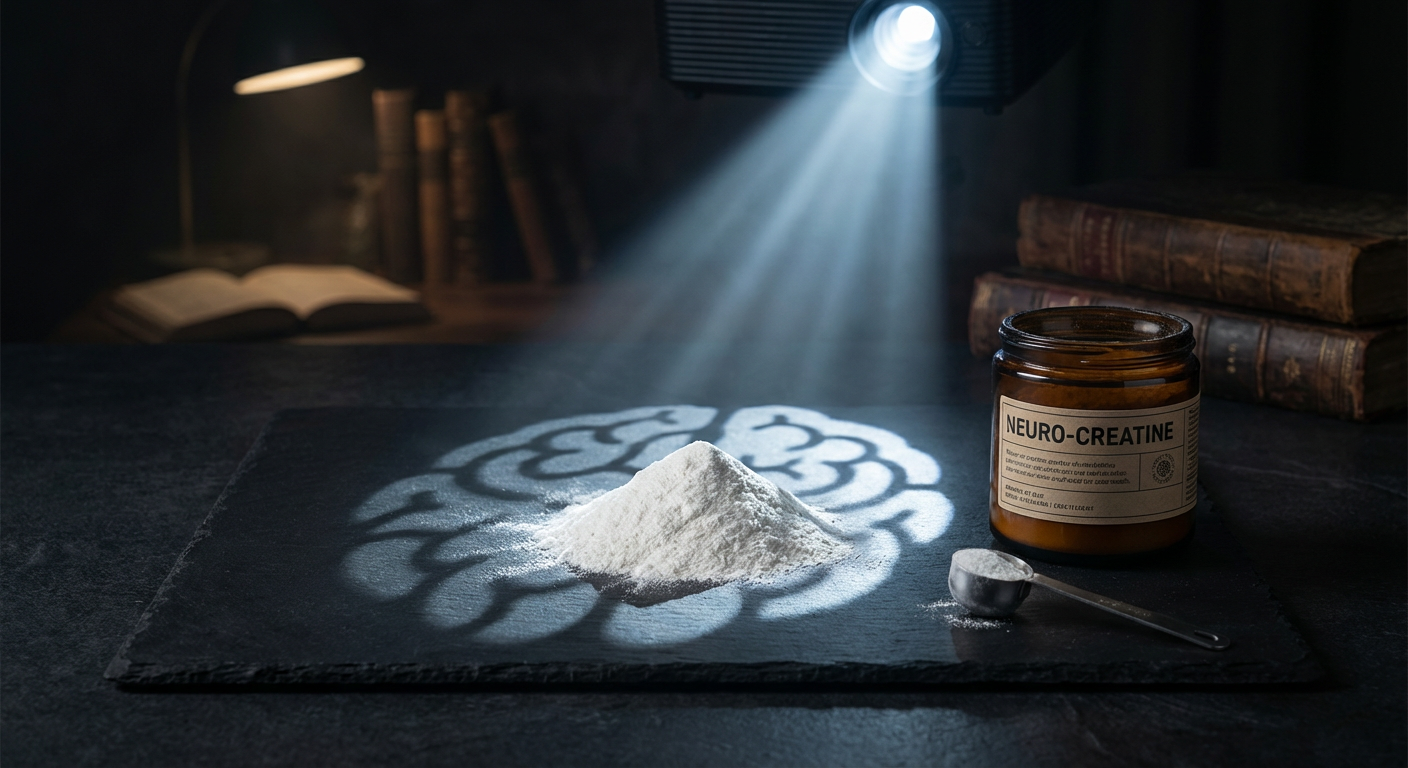
Building muscle and maintaining peak cognitive performance requires more than just high-volume training. For the active man, sleep is the ultimate recovery tool, yet life often gets in the way of a perfect eight-hour window. Emerging research suggests that creatine monohydrate, long known for its physical benefits, may act as a potent neuroprotective agent that helps the brain function more effectively during periods of acute sleep deprivation.
How Does Creatine Influence Brain Energy Metabolism?
Most men are familiar with creatine as a fuel source for skeletal muscle. It works by increasing the availability of phosphocreatine, which helps regenerate Adenosine Triphosphate (ATP): the primary energy currency of your cells. However, your brain is an incredibly high-metabolic organ, consuming roughly 20 percent of your body's total energy despite making up only 2 percent of your body weight.
When you are awake and active, your brain constantly depletes ATP. During sleep, your body works to restore these energy levels. When you cut that sleep short, your brain faces an energy deficit. Research indicates that creatine supplementation increases brain phosphocreatine levels, providing a "buffer" that helps neurons maintain energy homeostasis even when you are running on fumes (Rae et al., Proceedings of the Royal Society B, 2003). For the man balancing a demanding career and a rigorous lifting schedule, this means your brain has a deeper reservoir of energy to pull from during a stressful day.
Can Creatine Protect Your Brain During Sleep Restriction?
The most exciting research regarding creatine focuses on its ability to mitigate the cognitive "fog" that follows a late night. When you lose sleep, your executive function, reaction time, and mood typically plummet. This is where creatine appears to step in as a cognitive safeguard.
In a landmark study, researchers Looked at the effects of creatine supplementation on sleep-deprived individuals. The results showed that those taking creatine performed significantly better on complex executive tasks, such as random number generation and spatial recall, compared to a placebo group (McMorris et al., Psychopharmacology, 2006). This suggests that while your body might feel tired, your brain’s ability to process information remains sharper if your phosphocreatine stores are saturated.
Another study focused on physical performance and skill execution under sleep pressure. Researchers found that elite athletes who were sleep-deprived were able to maintain their passing accuracy and reaction speeds better when supplemented with creatine (Cook et al., Physiology & Behavior, 2011). This is critical for men who train early in the morning or late at night and need to maintain technical proficiency in the gym or on the field despite lack of rest.
Does Creatine Improve Sleep Quality Directly?
While creatine helps the brain handle the lack of sleep, the relationship between creatine and actual sleep quality is more complex. High levels of creatine in the brain may actually reduce "sleep pressure." Sleep pressure is driven by the buildup of adenosine: a byproduct of ATP breakdown. Since creatine helps recycle ATP more efficiently, it may lead to a slower buildup of adenosine.
Some animal studies have shown that creatine supplementation can actually lead to a decrease in the total amount of sleep needed because the brain is recovering more efficiently during the time it is asleep (Dworak et al., CNS & Neurological Disorders, 2017). However, for most men, this shouldn't be viewed as a reason to sleep less. Instead, it should be seen as a way to make your existing sleep more "productive" for your brain’s metabolic recovery.
Is Creatine a Replacement for Sleep?
It is vital to understand that creatine is a physiological aid, not a biological replacement for the restorative stages of sleep. Sleep is a multisystem process that involves hormone regulation, tissue repair, and the clearing of metabolic waste via the glymphatic system. Creatine can help replenish the energy (ATP) that your brain loses, but it cannot perform the specific hormonal tasks that occur during REM or Deep Sleep.
If you are consistently sleeping four hours a night and relying on five grams of creatine to get you through, you will still face long-term issues with testosterone production, cortisol regulation, and muscle protein synthesis. Creatine is a tool to help you survive the occasional "short night" and maintain training intensity: it is not a license to ignore your sleep hygiene. To truly optimize your recovery, you should combine creatine with the formula page ingredients that focus on the actual mechanics of falling and staying asleep.
How to Integrate Creatine Into a Recovery Protocol
For men aged 25-45 who are lifting heavy, the standard dose of 3 to 5 grams of creatine monohydrate per day is sufficient to saturate both muscle and brain tissue. Timing is less important than consistency, though some evidence suggests taking it post-workout may slightly favor muscle uptake. To maximize the recovery benefits, creatine should be one part of a "stacked" approach.
While creatine manages the energy side of the equation, you still need to address the nervous system’s ability to downshift into a restorative state. This is where ingredients like Magnesium Bisglycinate and L-Theanine come into play. Magnesium helps regulate the neurotransmitters that calm the nervous system, while creatine ensures that once you wake up, your brain has the energy it needs to tackle the day. You can see how these work together by taking the free sleep assessment to identify where your recovery loop is breaking down.
The Synergy of Creatine and Specialized Sleep Nutrients
Optimizing recovery is about closing the gap between the stress you put on your body and your body's ability to repair that damage. Creatine addresses the "energy gap" created by sleep deprivation. However, to achieve peak performance, you must also address the "quality gap" in your sleep.
Using a targeted supplement like DOZE provides the calming agents necessary to transition into deep, restorative sleep. When you combine the ATP-supporting effects of creatine with the sleep-inducing effects of a proper nighttime routine, you create a comprehensive recovery environment. This dual approach ensures that even on the days when you can't get a full eight hours, your brain and muscles are protected from the harshest effects of exhaustion.
Ready to Optimize Your Recovery?
Stop guessing about your recovery and start using a protocol backed by science. If you want to maintain your edge in the gym and the boardroom, you need to manage your brain energy and your sleep quality simultaneously.
Explore DOZE to improve your nightly rest, or take the free sleep assessment today to build a routine that supports your training goals.